
WELDING PRODUCTS
Brazing, soldering and welding all generate heat that can easily damage sensitive components, nearby surfaces or building materials if left unprotected. Refrigeration Technologies offers a full line of Viper® heat protection products designed to prevent fire hazards and heat transfer damage on every job, whether you’re working near wood framing and drywall or protecting expansion valves and sensing bulbs during a live-system repair. From reusable putty to flame-resistant pads and sprayable gel, these welding products give technicians the right level of protection for any brazing, soldering or welding application.


Choosing the Right Heat Protection Product
Not every job calls for the same type of protection. The right choice depends on what’s nearby and how contained or irregular the space is.
When working near wood framing, drywall, or insulation during a line set installation, the WetRag® Heatshield Flame-Resistant Pad is the better fit. Laid across the surface, it protects a broader, flatter area and can catch sparks that a molded putty isn’t designed to cover. It’s made from high temperature, fire-resistant absorbent carbon with a woven fiberglass core, can be used wet or dry, withstands heat up to 2500°F and is fully machine washable for repeated use.
When replacing a filter drier or brazing in line with a TXV, WetRag® Heat Blocking Putty is the right tool for the job. It molds directly around fittings and valve bodies, shielding sensitive components in tight, irregular spaces where a flat pad won’t conform to the joint. It withstands temperatures over 2000°F, is reusable up to 40 times and includes an indicator dye that fades as the product wears out.
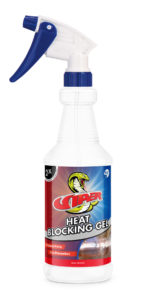
For low-temperature soldering near delicate plastic housings or sensitive electronics, the Viper Heat Blocking Gel offers a quick, wipeable layer of protection where the heat involved is lower and speed matters more than a heavy-duty barrier. It’s non-toxic, odor-free and wipes off easily once the job is done.
Welding Products FAQs
Which heat protection product should I use for my job?
It depends on the space and the level of heat involved:
- Line set installation near wood framing, drywall or insulation: Use the WetRag® Heatshield Flame-Resistant Pad. It covers a broader, flatter area and can catch sparks that putty isn’t designed to cover.
- Replacing a filter drier or brazing in line with a TXV: Use WetRag® Heat Blocking Putty. It molds directly around fittings and valve bodies to shield components in tight, irregular spaces where a flat pad won’t conform.
- Low-temperature soldering near delicate plastic housings or sensitive electronics: Use Viper Heat Blocking Gel. It offers a quick, wipeable layer of protection where speed matters more than a heavy-duty barrier.
Can these products be used together on the same job?
Yes. Many jobs call for more than one type of protection, for example, using a flame-resistant pad to protect nearby wood framing while also applying putty around a nearby valve body during the same repair. Choosing the right combination depends on what’s in the immediate work area.
Are these welding protection products reusable?
Yes, WetRag® Heat Blocking Putty is reusable up to 40 times, with an indicator dye that fades to signal when it’s time for a fresh piece. The WetRag® Heatshield pad is also reusable and machine washable, and can be used wet or dry depending on the job. Heat Blocking Gel is a single-use spray applied per job and wiped away once work is complete.
What temperatures can these products withstand?
WetRag® Heat Blocking Putty withstands temperatures over 2000°F, and the WetRag® Heatshield pad is rated up to 2500°F. Heat Blocking Gel doesn’t carry a specific temperature rating; it’s designed for low-temperature soldering applications and for preventing fire or heat damage around wood, drywall, or fabric during open-flame work, rather than for high-heat brazing or welding directly on a joint.